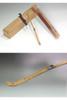
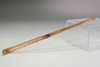
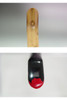
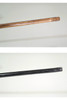
Naruse Munenori (b.1901) CHASHAKU Japanese bamboo tea scoop #5463
- SKU:
- 5463
- Condition:
- Used
- Shipping:
- Free Shipping





Please note that due to quarantine and biosecurity regulations, we cannot ship this item to certain countries, including Australia and New Zealand.
- length: 18.3cm (7.2in)
- weight: 3g (w/ box 87g)
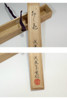
- writing on the case and box: After Kobari Enshu's "Arima-yama (Mt. Arima)" by Naruse Munenori.
Naruse Muneomi (1901- ?)
He was a bamboo artist especially good at tea ceremony art. Bamboo artist usually sharps bamboo with Nomi (chisel), however, Naruse made his art with Kogatana (small knife). Although many tea ceremony masters are fun of his art, nobody know his date of death. He also left his art in his 91 years old.
I have found a text where the monk Inokuchi Zenjo discusses Naruse Munenori, and I will introduce it with an English translation.
Bamboo Teascoop and Naruse Munenori
The bamboo teascoop serves merely to scoop matcha from the container into the teabowl, fulfilling no other role as a piece of tea ceremony equipment. Despite its simple and purely functional form, devoid of any decoration, when one holds the teascoop during the viewing of the tea utensils and examines it closely, it reveals a deep, profound appeal.
As of 1979, at the age of 78, Munenori Naruse, who silently and diligently carves bamboo teascoops, embodies such a character. It is well known that the creators of teascoops were traditionally the hidden presence behind the head of the school or the grandmaster, with renowned figures such as Shuko, Shotoku, Shoo, Sosui, Rikyu, and Sokei, none of whom were ever ostentatious.
Munenori also carves under the aegis of a Zen temple's sub-temple but never puts his name forward publicly. His modest and dignified nature suits this work well.
His distinctive technique involves carving with a single chisel without using small knives. Using the chisel with his left hand, he crafts delicate works that are truly astonishing.
The Munenori family could be described as a family of artists. Besides carving bamboo teascoops, he is proficient in flower arranging and calligraphy, while his wife is a woodcarver, and his daughter is a metal engraver who has won awards at traditional craft exhibitions. Each member of the family excels in a particular art, leading a life that is truly enviable.
Munenori creates unique items such as incense containers and tea utensils, but despite being encouraged to participate in tea utensil exhibitions, he persistently declines, saying, "I am just an amateur." I would like to recommend Mr. Naruse Munenori.
Inokuchi Zenjo


