Ogawa Choraku (1874-1939, disciple of Raku 11th Keinyu) Japanese KURO RAKU pottery teabowl #5527
- SKU:
- 5527
- Condition:
- Used
- Shipping:
- Free Shipping

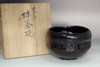





width: approx. 11.7cm (4.6in)
height: approx. 7.5cm (2.9in)
weight: 331g (w/ box 544g)
condition: Good antique condition.
Accessories: Tomobako (Original wooden box)
Shipping: Shipped from Japan with a tracking number. We take great care in professional packaging to ensure the item arrives safely.
This is an antique Kuro-Raku (Black Raku) tea bowl, striking for its deep, jet-black glaze. It features the signature "te-zukune" (hand-kneaded) method of traditional Raku ware, resulting in a subtle asymmetry and a robust, thick-walled texture that fits comfortably and warmly in the palms.
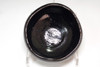
The powerful carving from the kodai (foot) to the body, along with the unique "keshiki" (landscape) created by the layering of the glaze, exudes a quiet yet commanding presence in a tea ceremony setting. Inside, the bottom of the bowl reveals complex patterns formed by the natural transformation of the glaze, offering a rich, one-of-a-kind expression for every piece.
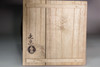
The accompanying tomobako (original wooden box) bears an ink-brushed inscription and seal, testifying to the care with which it has been preserved over the generations. This exquisite piece is highly recommended for those who appreciate the distinctive patina and character of aged antiques.
Ogawa Choraku (1874-1939)
Potter of Kiyomizu ware. Studied under Keinyu and Konyu of the Raku family.
From South Kuwa in Tanba Province (modern-day Kameoka in Kyoto Prefecture).
In 1885, he moved to Kyoto and received pottery instruction from Konyu Raku. In 1903, he started a branch family at Konyu's behest and began making pottery in earnest at a kiln in Gojo-zaka. At this time he was granted the name "Choraku" by Master Mokurai, the head priest of Kennin Temple, as well as the name "Choyuken" by Ennosai of the 13th generation of the Urasenke.
In 1910, he moved his kiln to Tenno Town in Okazaki, where he continued to fire Raku ware making use of the best qualities of Keinyu and Konyu while introducing his own touches.


