“That’s Not a Hamada”: A Sudden Email from a World-Renowned British Potter
13th Oct 2026

reference: https://www.philrogerspottery.com/
Phil Rogers, who passed away at the age of 69, was one of Britain’s leading studio potters. He operated a workshop in the countryside near the village of Rhayader in Powys, Wales. Throughout his distinguished career, he actively contributed to the global ceramics community, serving as Chairman of the Craft Potters Association (CPA) for four terms (starting with his first appointment in 1991), becoming a member of the International Academy of Ceramics in 1999, and directing the International Ceramics Festival in 1999.
More than a decade ago, I had the incredible opportunity to learn a lesson directly from this great potter.
At the time, I was selling items on eBay and put up a piece attributed to Shoji Hamada. To my surprise, I received a message from Phil Rogers himself, warning me: "That is not a piece by Hamada. You should stop the listing."
Doubting that such a prominent figure would ever reach out to someone like me, I looked up his official website to double-check and contacted him there. Sure enough, it was really him. At the time, his website featured a banner photo of a charming young boy standing in front of the iconic gate of the Mashiko Museum of Ceramic Art (Hamada Shoji's former residence). When I asked if the boy was his son, he kindly replied, "Yes, he is."
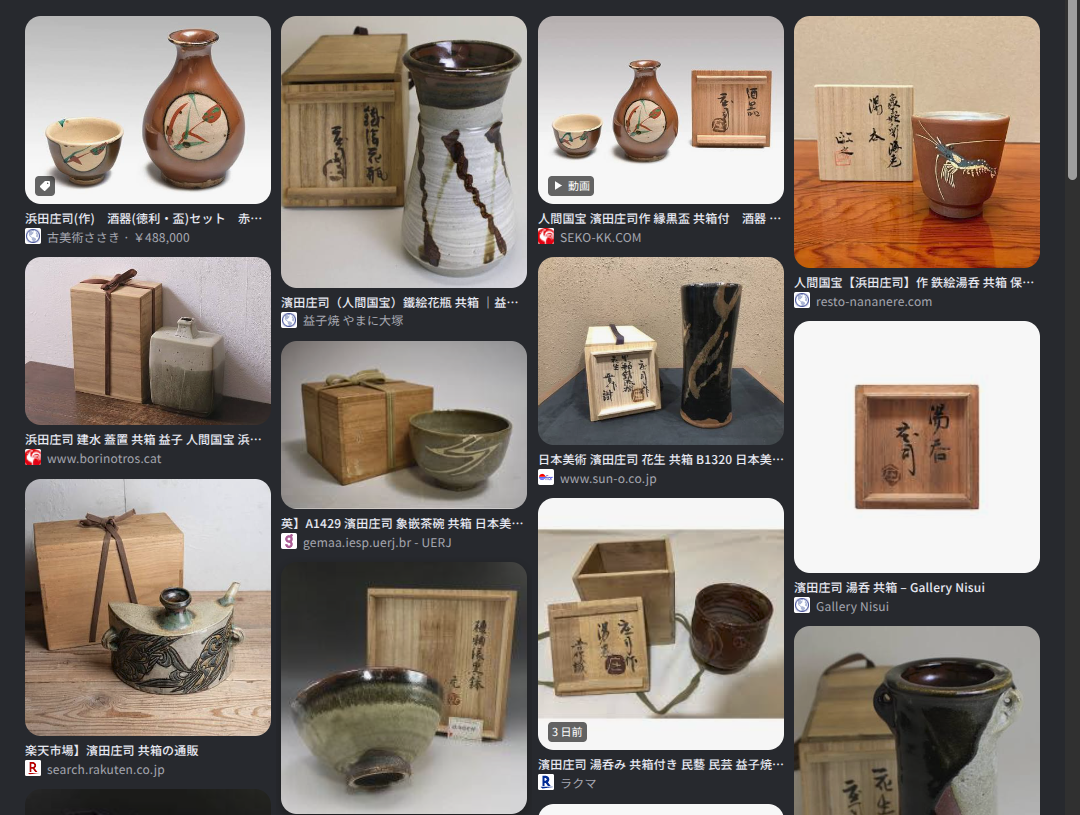
reference: Google Image Search - Shoji Hamada Original Box (Tomobako)
Overawed as I was, I asked him why the piece wasn't authentic, and he generously shared his knowledge on how to spot the difference. Here is what he taught me:
- Hamada only signs (authenticates) the inside of the tomobako (wooden box) lid. If you see brushwork on the outside of the box, be suspicious.
- The ink used for Hamada’s signature seal was made using soil from Mashiko. If the seal on the box has a bright, vibrant color like lipstick, be suspicious.
- Hamada had excellent calligraphy. If the brushwork on the box appears poorly written, be suspicious. (My memory on this point is a bit hazy, so he may have phrased it slightly differently.)
Once this was pointed out to me, I noticed that many items listed for high prices on eBay suffered from these exact flaws.
As for the piece I had listed, Phil mentioned that there was something unnatural about its overall style. Looking at it again, I could see it clearly—there was a sense of strain and hesitation typical of a copy, lacking the effortless power found in the works housed at the Mashiko Museum. It was a moment that made me painfully aware of my own lack of knowledge.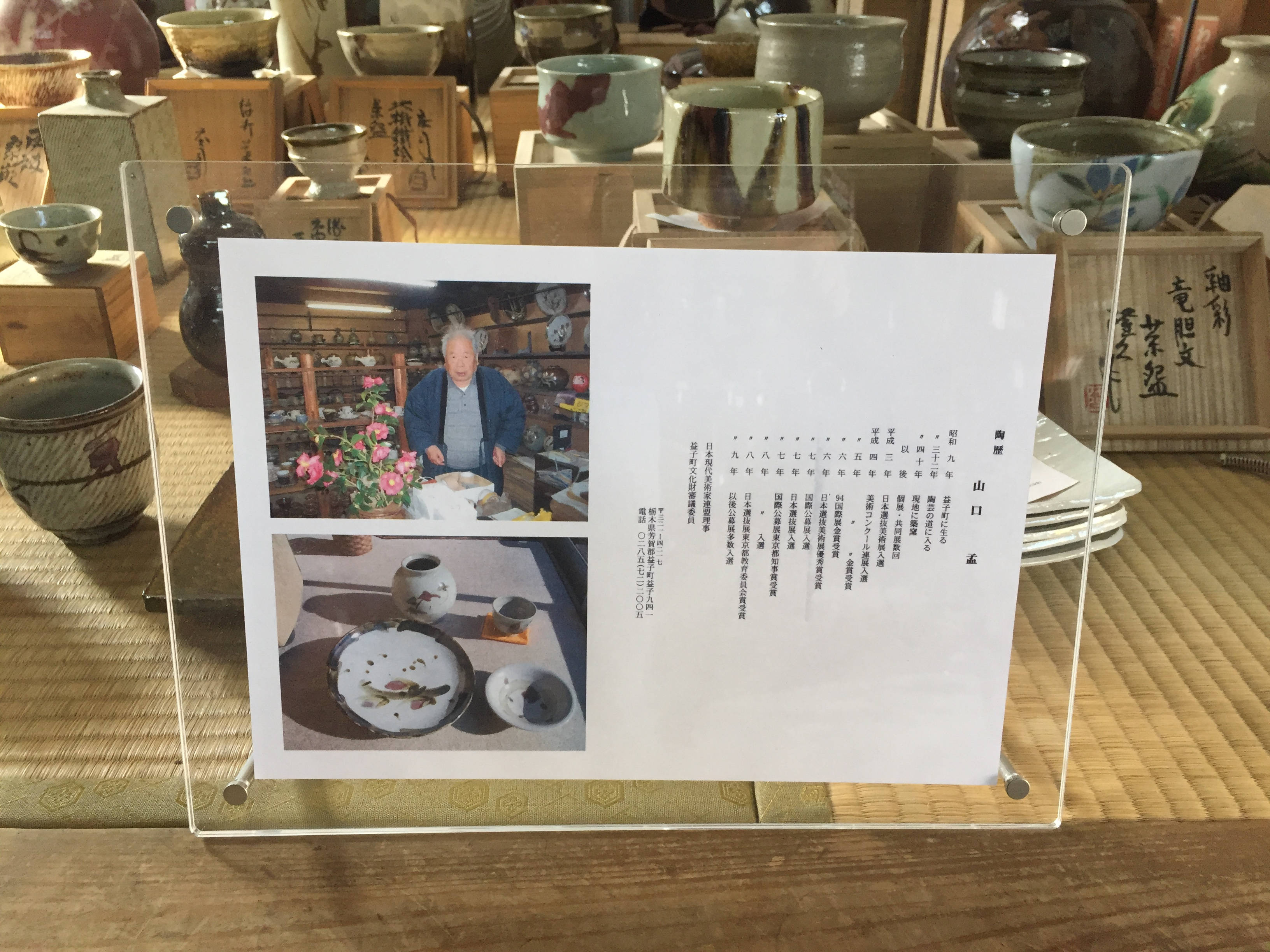
A Side Note
During my studies, I visited Mashiko and stopped by the shop of the potter Hajime Yamaguchi. Since it was shortly after he had lost his wife, he was running the shop himself, giving me the chance to chat with him.
Mr. Yamaguchi was a wonderfully open-hearted man who casually shared stories about Mashiko pottery. Among them was a story about his memories of Hamada: while Hamada brushed his own signatures on the tomobako, he actually had his apprentices write quite a few of them for him. Looking back now, it was a fascinating piece of insider history, and I regret not asking him to elaborate further at the time.