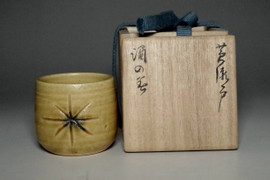
Japanese Hisoku Nanban Guinomi by Sakuchi Ensen #5555
- SKU:
- 5555
- Condition:
- Used
- Shipping:
- Free Shipping


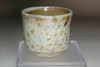
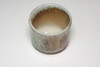
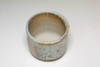
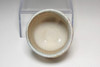

width: approx. 5.8cm (2.3in)
height: approx. 5.0cm (2.0in)
weight: 75g (w/ box 141g)
condition: Very good
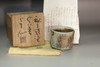
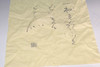
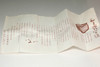
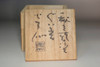
Accessories: Tomobako (Original signed wooden box), Tomonuno (Original wrapping cloth), Shiori (pamphlet)
Shipping: Shipped from Japan with a tracking number. We take great care in professional packaging to ensure the item arrives safely.
Sakuchi Ensen (1922-?)
In 1946, he decided to become a ceramic artist. In 1957, after suffering many hardships, he created a new pottery and named it Hishoku Nanban Pottery. In 1985, he created the brilliant red and white tea bowl.

This is an exceptional Japanese "Hisoku Nanban" Guinomi (sake cup) crafted by the master ceramic artist Sakuchi Ensen, based in the Tsuyama and Katsuyama regions of Okayama Prefecture. Sakuchi Ensen inherited a rich ceramic lineage from his father, Sakuchi Seijiro, who revived the historic Gondawa ware before World War II. Driven by a powerful desire to create something entirely unique rather than merely copying traditional methods, Sakuchi Ensen developed "Hisoku Nanban-yaki." This innovative style uses absolutely no artificial glaze, relying purely on the intense heat and flames of the kiln to draw out deep, mystical colorations from the raw clay.
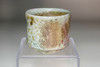
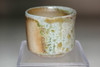
The primary visual and artistic highlight of this piece is the dramatic landscape formed naturally inside the kiln. Although unglazed, the surface features a stunning, velvety cascade of greenish-white natural ash glaze (shizen-yu), created when flying wood ash melts at extreme temperatures. This brilliant organic effect stands in breathtaking contrast to the robust, reddish-brown scorch marks (hihiro) on the base and sides, showcasing the raw, rustic power of the earth.
The structural balance of this hand-thrown cup is extraordinary. The gentle irregularities born from the pottery wheel give it an organic warmth and an elegant embodiment of "Yo-no-Bi" (beauty in utility) that mass-produced modern ceramics cannot replicate. Complete with its original signed wooden storage box (Tomobako), custom wrapping cloth (Tomonuno), and artist profile pamphlet (Shiori), this authentic masterpiece is highly recommended for collectors of fine Japanese studio pottery, tea ceremony practitioners, or anyone wishing to elevate their sake-tasting experience.