Ogata Kenzan (1663-1743) Set of 2 antique Hyakunin-Isshu karuta plates #4426
- SKU:
- 4426
- Shipping:
- Free Shipping

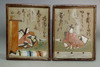
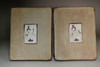
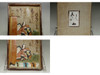
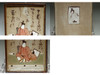


- width: approx. 12cm (4 23⁄32in) x 9.5cm (3 47⁄64in)
- height: approx. 1.5cm (19⁄32in)
- weight: 176g, 169g
Hyakunin-Isshu is the traditional Japanese collection of one hundred poems by one hundred poets.
poem
No.2 Empress Jito
The spring has passed
And the summer come again;
For the silk-white robes,
So they say, are spread to dry
On the "Mount of Heaven's Perfume."
No.6 Otomo no Yakamochi
If I see that bridge
That is spanned by flights of magpies
Across the arc of heaven
Made white with a deep-laid frost,
Then the night is almost past.
Ogata Kenzan (1663-1743)
Born the third son of Ogata Soken of Kariganeya, a kimono fabrics wholesaler in Kyoto, with Ogata Korin as one of his older brothers.He studied under Nonomura Ninsei, learning to create pottery. When he was around 37 years of age, he opened a kiln in Kiyotaki, right near the Ninsei Kiln, and as it was located in northwest Kyoto (which in Japanese, is referred to as the cardinal direction of "Inui", a word that can be pronounced as "Ken"), he inscribed the signature of "kanzan" into his products since then.His style was influenced by Ninsei, his master, and Korin, his older brother, using many shades of color in the painted earthenware he produced. He also excelled in not only pottery, but art and writing as well, and he moved to Edo in his later years, gaining fame as a writer and pottery artist.The first generation kanzan had no children or stepchildren. The name of kanzan has been inherited by subsequent generations, but these successions are not based on blood relations or master to student relationships, and are only through people calling themselves by the name.


