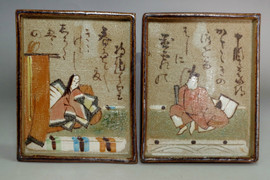
Ogata Kenzan (1663-1743) Set of 3 antique painted pottery Hyakunin-Isshu karuta plates #4428
- SKU:
- 4428
- Shipping:
- Free Shipping

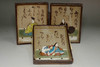
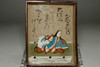

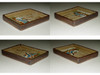


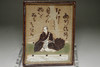
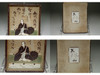

- width: approx. 12cm (4 23⁄32in) x 9.5cm (3 47⁄64in)
- height: approx. 1.5cm (19⁄32in)
- weight: 171g, 168g ,163g
Hyakunin-Isshu is the traditional Japanese collection of one hundred poems by one hundred poets.
poem
No. 46 Sone no Yoshitada
Like a mariner
Sailing over Yura's strait
With his rudder gone:
Where, over the deep of love,
The end lies, I do not know.
No.60 Lady Koshikibu
By Oe Mountain
The road to Ikuno
Is far away,
And neither have I beheld
Nor crossed its bridge of heaven.
No. 86 The Monk Saigyo
Should I blame the moon
For bringing forth this sadness,
As if it pictured grief?
Lifting up my troubled face,
I regard it through my tears.
Ogata Kenzan (1663-1743)
Born the third son of Ogata Soken of Kariganeya, a kimono fabrics wholesaler in Kyoto, with Ogata Korin as one of his older brothers.He studied under Nonomura Ninsei, learning to create pottery. When he was around 37 years of age, he opened a kiln in Kiyotaki, right near the Ninsei Kiln, and as it was located in northwest Kyoto (which in Japanese, is referred to as the cardinal direction of "Inui", a word that can be pronounced as "Ken"), he inscribed the signature of "kanzan" into his products since then.His style was influenced by Ninsei, his master, and Korin, his older brother, using many shades of color in the painted earthenware he produced. He also excelled in not only pottery, but art and writing as well, and he moved to Edo in his later years, gaining fame as a writer and pottery artist.The first generation kanzan had no children or stepchildren. The name of kanzan has been inherited by subsequent generations, but these successions are not based on blood relations or master to student relationships, and are only through people calling themselves by the name.